Data-Ish • Edition 4
Short on time? Here's the gist.
Before tools, dashboards, or funding requests, teams need a shared picture of what matters. Call it whatever you want: a logic model, a log frame, or 'Bob'. What matters is the thinking and shared understanding.
Things that make you go hmmm.

The Grocery Store Problem
You know that feeling when you go to the grocery store hungry?
Everything looks good. You end up with a lot of ingredients and impulse buys with no actual meals.
Program design without a shared understanding works the same way.
When teams don’t agree on what they’re trying to learn, what success actually looks like, or how change is supposed to happen;
Every idea sounds reasonable
Every metric feels important
Every system promises to help
The Cheapest Time to Think Is at the Beginning
Clarity First. Systems Second.
Logic models don’t add work; they prevent wasted work. When teams skip this step, the cost shows up later as:
Data you collect but don’t trust
Dashboards no one uses
Reports that don’t answer real questions
Systems that reflect decisions no one remembers making
Spending time upfront to agree on what matters helps:
Reduce rework
Shorten decision-making
Prevent, “but that’s not what I meant,” conversations
Make data feel supportive instead of burdensome
Process > Product (Every Time)
One of the biggest mistakes organizations make is treating this as a deliverable instead of a conversation.
When one person builds it alone, you get:
Compliance, not ownership
Documentation, not clarity
A file no one revisits
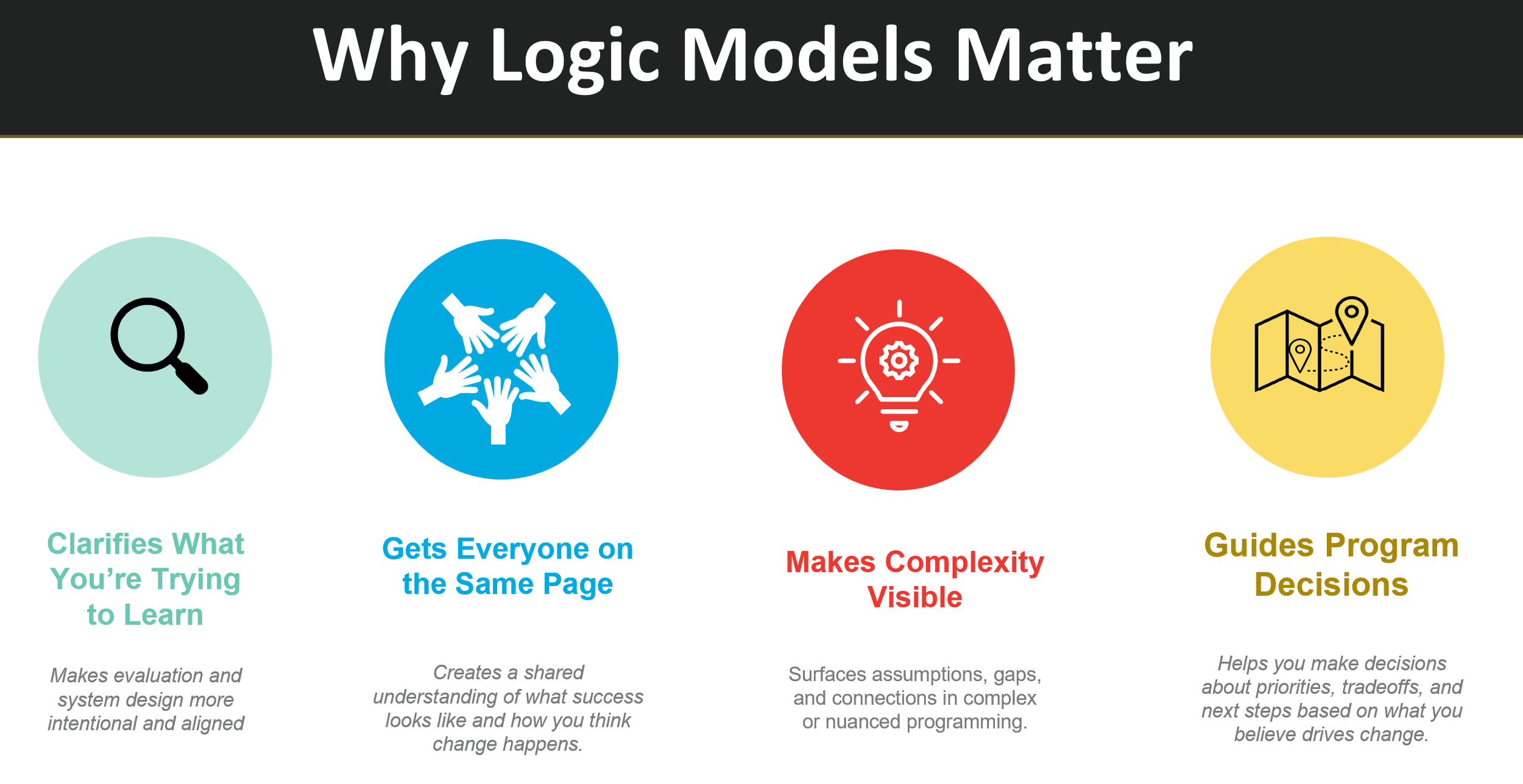
When teams build this together, the benefits in the graphic above aren’t theoretical; they show up in how decisions get made.
It doesn’t have to look a certain way. You don’t need the “right” language or even to call it a logic model. Sketch it on a napkin, map it with LEGO, or hash it out on a whiteboard.
This isn’t about perfection. It’s about shared direction.
Field Notes

This doesn’t have to be painful, and it doesn’t require an advanced degree.
About 30% of our current projects focus on helping teams design “logic models” from the front line up, bringing together people closest to the day-to-day work with those responsible for decisions and systems.
The facilitator’s job isn’t to teach jargon or walk through a template. It’s to create a space and process where everyone can contribute meaningfully and feel confident that their experience counts.
We don’t begin by defining terms or introducing a framework.
We begin with questions.
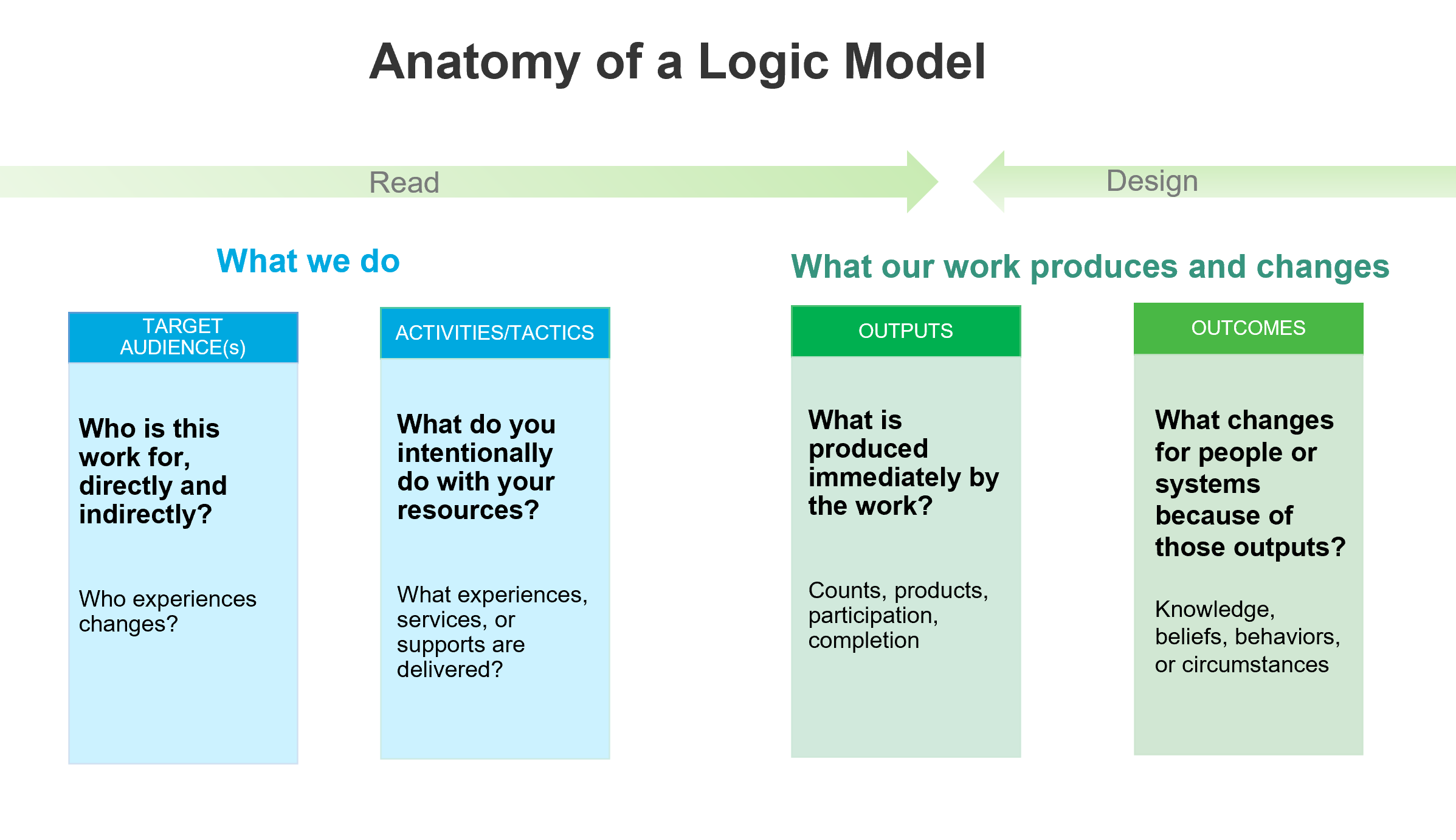
As teams talk through what they do, why they do it, and what they notice, patterns surface.
That’s the work.
The model just makes it visible.
Need help facilitating the process with your team?
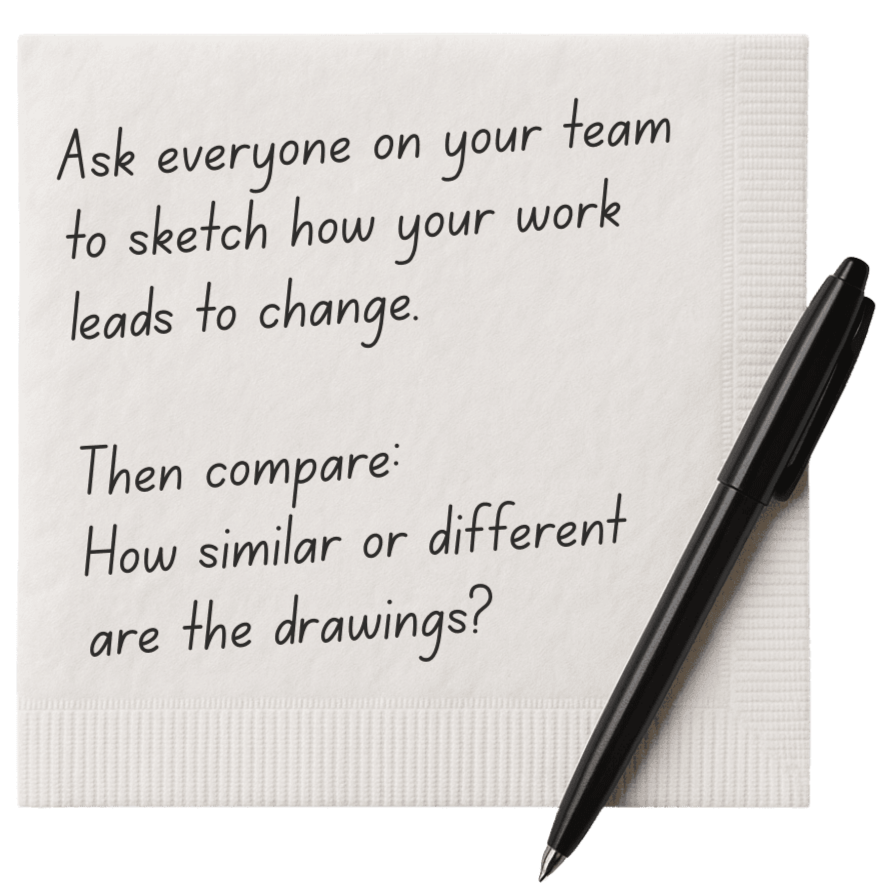
Napkin Doodle Prompt
Rad Resources
"Living Logic Models"
"Living Logic Models" simplifies complex concepts by showing rather than telling. Participants use yarn to physically connect activities and outcomes, making abstract relationships tangible and easier to understand.