
March 2026 • Data-Ish
Things that make you go hmmm.
Whose insight shaped the question, not just the answer?
Many groups invite diverse participants to respond to prompts that have already been framed by those with the most power in the room. When that happens, participation is real, but influence is limited.
Design the process so the group shapes it.
Start with: “What questions should we be asking?” before introducing predefined goals.
Invite individuals to generate questions silently first, then cluster and name themes together.
Document not just the conclusions, but who raised key ideas so the final product reflects the voices you intended to include.
When people shape the questions, they shape what counts.
What assumptions are setting the ceiling on what’s possible?
Phrases like “that’s not realistic,” “we’ve already tried that,” or “funders won’t go for it” can quietly narrow a group’s thinking. Sometimes they reflect real constraints, and sometimes they’re guardrails masquerading as facts.
In the moment:
Name and park assumptions. Create a visible list titled “Assumptions We’re Carrying” and return to it intentionally before decisions are finalized.
Ask for evidence.
“What experience is that based on?”
“Under what conditions might that be different?
Separate imagination from feasibility.Allow space to explore possibilities before shifting into constraint-checking.
When assumptions are made visible, groups can choose which to keep and which ones to challenge.
Need a thinking partner for strategy or evaluation design?
Field Notes
We work with clients to design systems and approaches that include the voices of janitors to CEOs and everyone in between.
Why? Because everyone sees a different slice of how the work actually functions.
Early in my career, I was helping a client redesign their database to better align with their operations. We were deep in workflow diagrams and reporting structures when a program staff member offered to give me a tour of the site.
On the wall were certificates for two locations. We were building the system for one. When I asked whether data needed to be reported separately by site, the answer was immediate: yes.
Had we designed solely from leadership conversations and spreadsheets, the system would have been misaligned from day one. The lesson wasn’t about databases. It was about perspective.
People closest to the work see what formal plans and strategy documents often miss.
When we exclude them from design, whether in strategy, evaluation, or systems, we don’t just miss voices. We miss reality.
Need help facilitating the process with your team?
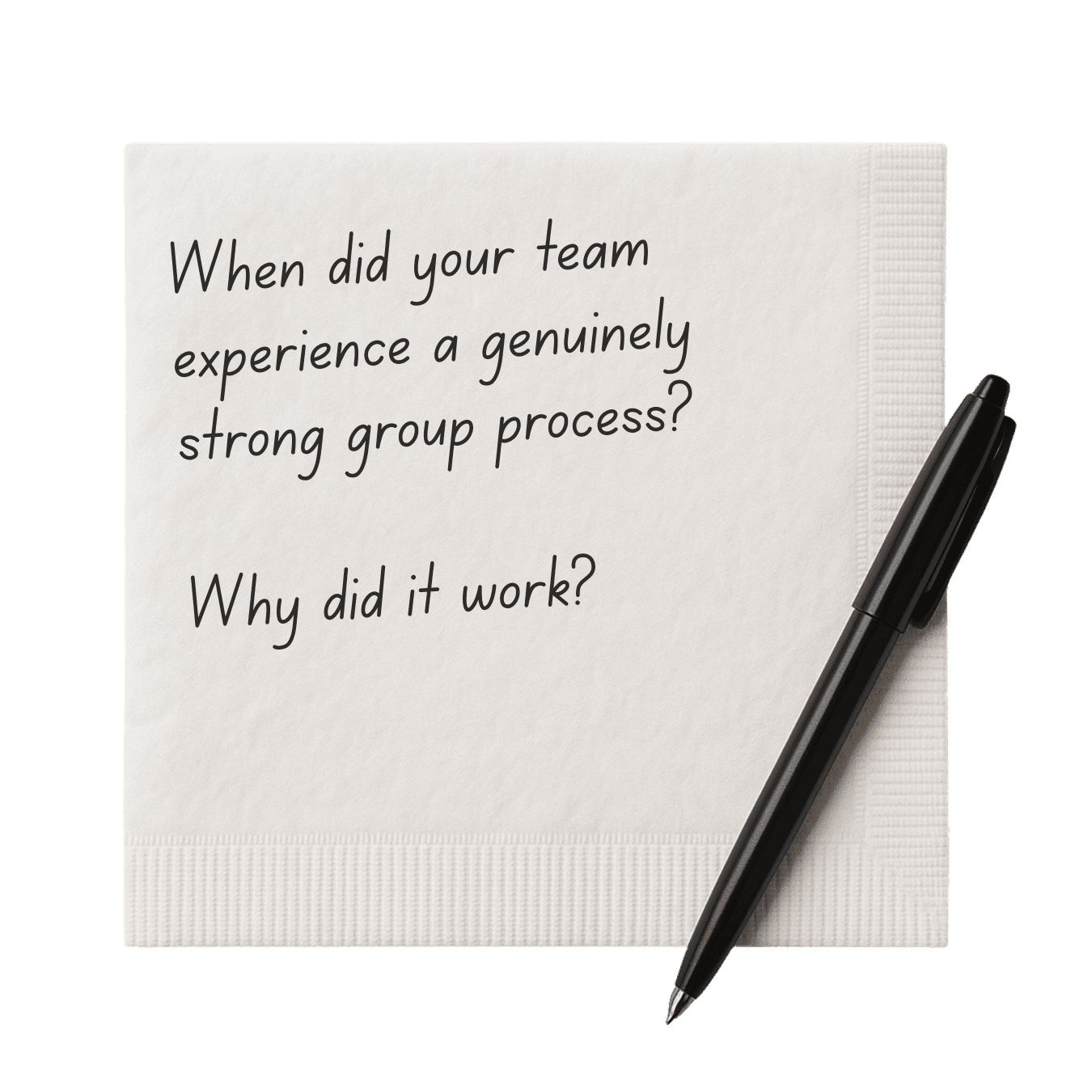
Doodle Prompt
Rad Resource
Group process planning worksheet

Make it stand out
This practical planning tool helps you think through:
WHO needs influence — not just airtime
WHAT is open to discuss and what is already constrained
WHERE the physical or virtual space reinforces (or interrupts) power
HOW ideas will be generated, challenged, prioritized, and assigned
It’s not about running a better meeting.
It’s about designing the structure that shapes what gets decided and what moves forward.